
The Art of Mending
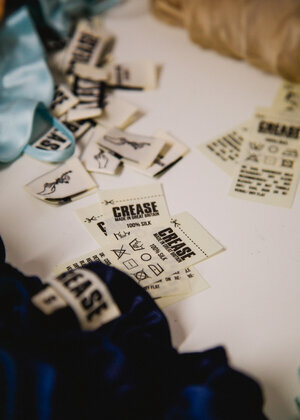
Hello from CREASE Studios,
It’s Rosemary and Kate here from CREASE Studios! Today, we’d like to talk about the art of mending and why it’s so important to us at CREASE!
The Art of Mending: Why Repairing Our Clothes Matters
There is something quietly beautiful about a garment that has been repaired.
A loose button, a worn hem, a small tear or a patch of fabric might once have been seen as an imperfection. But perhaps we can begin to see these marks differently. Rather than signs that a piece of clothing has reached the end of its life, they can be evidence that it has been lived in, loved and cared for.
At CREASE Studios, we are interested in changing the way we think about our relationship with clothes. We believe clothing should not be disposable. It should be made carefully, worn often, repaired when necessary and, where possible, passed on.
Mending is a small act, but it asks us to slow down.
Why have we stopped mending?
For generations, repairing clothing was simply part of everyday life.
Clothes were valuable because making them required time, skill and resources. A torn shirt wasn't necessarily thrown away. It was repaired. A worn jumper might be patched. A dress could be altered as a body changed.
As clothing became cheaper and more readily available, repairing something could begin to feel like more effort than replacing it. We became consumers rather than caretakers.
The result is a strange contradiction. We have more clothes than ever, but often feel less connected to the things we own.
At CREASE, we think mending offers a way back.
Mending creates a relationship with what we wear
There is a difference between owning a garment and caring for one.
When you repair something yourself, you become more aware of how it was made. You notice the construction, the fabric and the small details that might otherwise go unseen.
You begin to understand that clothing is not simply something that appears in a shop. It is the result of materials, labour, time and skill.
This awareness can change the way we shop, too.
When you know how much work goes into making something, it becomes harder to think of clothing as disposable.
The beauty of an imperfect garment
We are often encouraged to seek perfection from our clothes.
We want pristine fabrics, perfect finishes and garments that look untouched. But the older something becomes, the more likely it is to carry traces of its life.
A faded colour. A softened seam. A repaired cuff.
These things can make a garment more beautiful, not less.
Think of a favourite pair of jeans that has moulded to your body over years of wear. Or a jumper that reminds you of the person who gave it to you. Its value isn't found in its newness.
It is found in its history.
Mending allows that history to continue.
Learning the skills our grandparents knew
There is also something powerful about relearning skills that have gradually disappeared.
Sewing, darning, patching and altering are not simply practical skills. They are forms of knowledge passed between people.
When we teach someone how to sew a button or repair a seam, we are passing on more than a technique. We are passing on an alternative way of thinking about consumption.
This is one of the reasons we love bringing people together to make.
Craft creates space for conversation. When hands are occupied, conversation often flows more freely. A simple sewing project can become an opportunity to share stories, knowledge and experiences.
In this sense, mending can be communal as well as practical.
Mending as an act of resistance
In a culture built around constant consumption, choosing to repair something can feel surprisingly radical.
It says: this is worth keeping.
It says: I don't need to replace this simply because it is no longer perfect.
And it says that the value of an object can grow through time rather than diminish.
For us, this is at the heart of slow fashion.
We founded CREASE Studios in opposition to the disposability of modern fashion. We make slowly, work with considered materials and design pieces that we hope will remain in your wardrobe for years.
But the responsibility doesn't end when a garment leaves our studio.
How a piece is washed, stored, worn and repaired all becomes part of its story.
What if we celebrated the signs of wear?
Perhaps we need to become less afraid of our clothes changing.
We often think of wear as something to prevent, but wear is inevitable. Fabric softens. Colours fade. Seams loosen. Things happen.
Rather than trying to keep our clothes frozen in their original state, we could accept that they will evolve alongside us.
A well-loved garment should look loved.
The marks of wear tell us that something has been useful. They tell us that it has been part of someone's life.
And perhaps this is what makes clothing truly personal.
Start small
You don't need to become an expert seamstress to begin mending.
Start with a button.
Learn how to repair a loose seam. Try a simple patch. Learn how to darn a small hole. Take something to a tailor rather than throwing it away.
The important thing is simply to begin seeing repair as an ordinary part of having clothes.
There is no need for every repair to be invisible, either. A visible stitch or carefully chosen patch can become part of the design.
The Japanese tradition of boro, for example, celebrates textiles that have been repeatedly patched and repaired. The beauty lies not in hiding the history of the fabric, but in allowing it to remain visible.
Clothes become valuable through time
We don't think clothing is inherently meaningful.
A piece of silk, cotton or linen begins simply as material. It becomes meaningful through the people who make it, wear it, alter it, repair it and pass it on.
That is why we believe so strongly in making clothing that has the possibility of a long life.
We want our pieces to be worn.
Not carefully preserved in a wardrobe, waiting for the perfect occasion, but lived in. Taken on journeys. Worn to dinner. Washed. Repaired. Worn again.
Because perhaps the most beautiful thing we can do for our clothes is to give them a life.
And when something eventually shows the marks of that life, perhaps we shouldn't see it as ruined.
Perhaps we should see it as becoming ours.
With love,
Kate & Rosemary
Founders of CREASE Studios

Hand-crafted from 40 momme 100% heavy silk satin, the Joanie slip dress embodies timeless elegance and effortless femininity. Cut on the bias for the perfect drape, it skims and flatters the natural silhouette with a fluid, body-skimming fit.
A soft cowl neckline, delicate adjustable straps, and an elegant low back bring a touch of sensuality, while deep side slits add modern ease and movement.
Whether styled for an evening occasion, a wedding, or a refined day-to-night look, the Joanie slip is a piece designed to endure as a wardrobe icon.
Designed and made to order in London.
Colour : Sable
Also available in other colours
Custom Orders
We’d love to custom fit this dress to you! Please select ‘Custom’ in sizing and we’ll be in touch to get your measurements.
Please note that we cannot accept returns on Custom orders as this piece will be made to fit your unique measurements. Alterations and repairs can be made free of charge within the 14 day window of receiving your item.
Any questions? We’d love to help!
Pop us an email at info@creasestudios.com

Long slip dress with a unique print from the designers personal collection of cloud photographs.
Bias cut for the optimum drape and fit.
Meticulously hand-crafted in 100% heavy silk satin.
Hand finished adjustable, fine and delicate straps in silk.
Soft, smooth, breathable and naturally hypoallergenic.
Gentle hand wash at 30 or dry clean recommended.
Made to order in London.
Delivery
This piece is part of our Zero-Waste programme.
Delivery is 5 weeks after ordering.
If you’d like it sooner, please email us at info@creasestudios.com and we will do our best to accommodate!
Custom Orders
We’d love to custom fit this dress to you! Please select ‘Custom’ in sizing and we’ll be in touch to get your measurements.
Please note that we cannot accept returns on Custom orders as this piece will be made to fit your unique measurements. Alterations and repairs can be made free of charge within the 14 day window of receiving your item.

Pre-Order
Our beautifully draped slip dress has a unique print from our personal collection of cloud photographs.
Asymmetric and bias-cut for the optimum drape and fit
Meticulously hand-crafted in 100% heavy silk satin
Hand finished, delicate, fine straps in silk and 14k gold plated brass chain
Soft, smooth, breathable and naturally hypoallergenic
Gentle hand wash at 30 or dry clean recommended
Made to order in London
Delivery
This piece is part of our Zero-Waste programme.
Delivery is 5 weeks after ordering.
If you’d like it sooner, please email us at info@creasestudios.com and we will do our best to accommodate!
Custom Orders
We’d love to custom fit this dress to you! Please select ‘Custom’ in sizing and we’ll be in touch to get your measurements.
Please note that we cannot accept returns on Custom orders as this piece will be made to fit your unique measurements. Alterations and repairs can be made free of charge within the 14 day window of receiving your item.

Long slip dress with a unique print from the designers personal collection of cloud photographs.
Bias cut for the optimum drape and fit.
Meticulously hand-crafted in 100% heavy silk satin.
Hand finished adjustable, fine and delicate straps in silk and 14k gold plated brass chain
Soft, smooth, breathable and naturally hypoallergenic.
Gentle hand wash at 30 or dry clean recommended.
Made to order in London.
Delivery
This piece is part of our Zero-Waste programme.
Delivery is 5 weeks after ordering.
If you’d like it sooner, please email us at info@creasestudios.com and we will do our best to accommodate!
Custom Orders
We’d love to custom fit this dress to you! Please select ‘Custom’ in sizing and we’ll be in touch to get your measurements.
Please note that we cannot accept returns on Custom orders as this piece will be made to fit your unique measurements. Alterations and repairs can be made free of charge within the 14 day window of receiving your item.

Scalloped thong in pure silk, handcrafted in London.
Luxuriously soft, smooth and breathable
Naturally hypoallergenic
Comfortable elasticated fit
Hand wash at 30 recommended
Custom Orders
We’d love to custom fit this dress to you! Please select ‘Custom’ in sizing and we’ll be in touch to get your measurements.
Please note that we cannot accept returns on Custom orders as this piece will be made to fit your unique measurements. Alterations and repairs can be made free of charge within the 14 day window of receiving your item.

Scalloped bandeau bra in pure silk, handcrafted in London.
Adjustable spaghetti straps.
Luxuriously soft, smooth and breathable.
Naturally hypoallergenic
Comfortable elasticated fit.
Hand wash at 30 recommended.
** Delivery in time for Valentines Day if ordered before the 10th February!
Custom Orders
We’d love to custom fit this dress to you! Please select ‘Custom’ in sizing and we’ll be in touch to get your measurements.
Please note that we cannot accept returns on Custom orders as this piece will be made to fit your unique measurements. Alterations and repairs can be made free of charge within the 14 day window of receiving your item.

100% silk
Handcrafted in our studio in London
Luxuriously soft, smooth and breathable
Naturally hypoallergenic
Comfortable elasticated fit
Hand wash at 30 recommended
Custom Orders
We’d love to custom fit this dress to you! Please select ‘Custom’ in sizing and we’ll be in touch to get your measurements.
Please note that we cannot accept returns on Custom orders as this piece will be made to fit your unique measurements. Alterations and repairs can be made free of charge within the 14 day window of receiving your item.
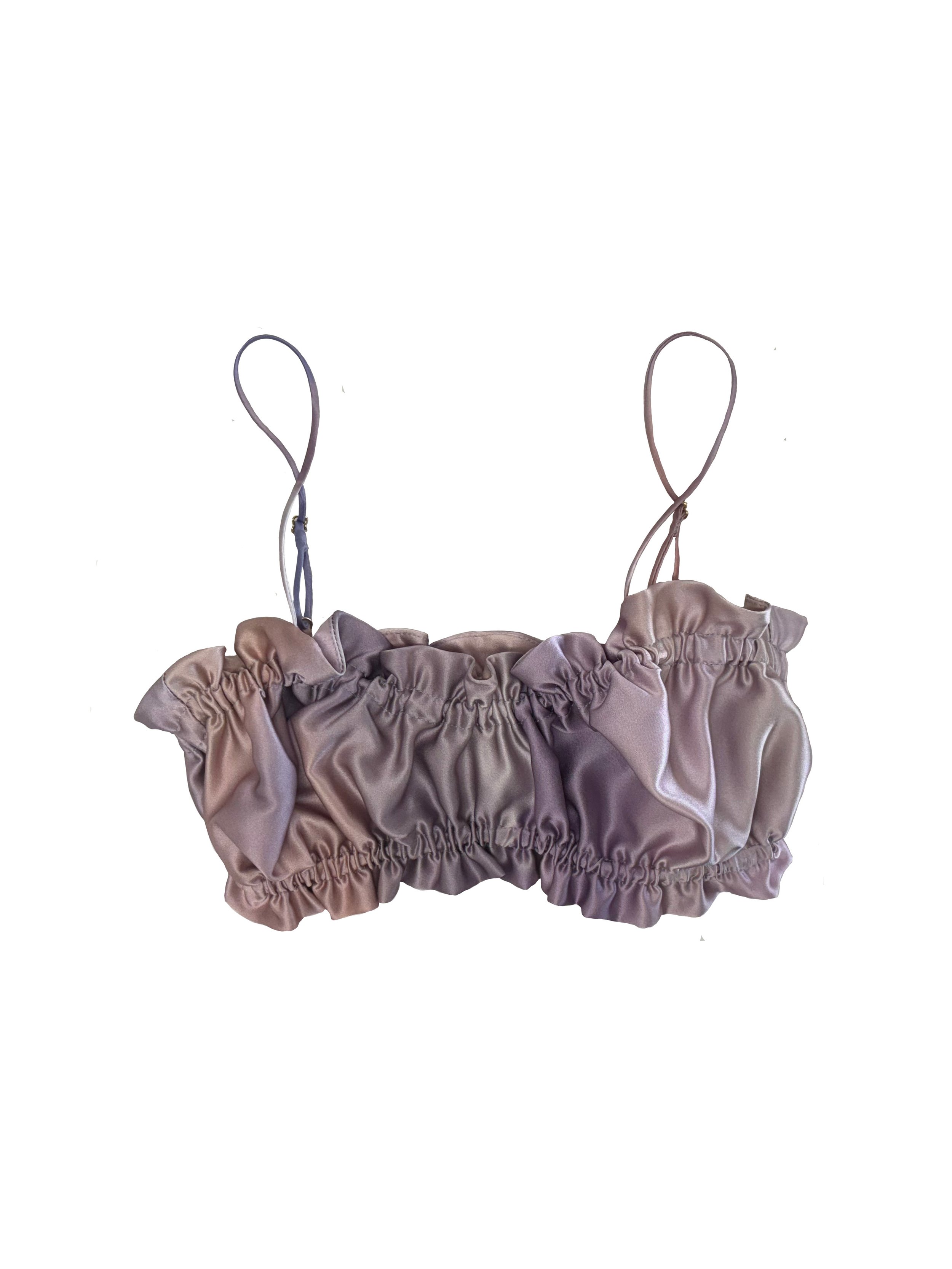
Scalloped bandeau bra in pure 30 momme Silk Satin, handcrafted in London.
Part of our Zero Waste Programme, print may vary, making each piece unique.
Cloud print designed from designers own collection.
Adjustable spaghetti straps.
Luxuriously soft, smooth and breathable.
Naturally hypoallergenic
Comfortable elasticated fit
Hand wash recommended.
Custom Orders
We’d love to custom fit this dress to you! Please select ‘Custom’ in sizing and we’ll be in touch to get your measurements.
Please note that we cannot accept returns on Custom orders as this piece will be made to fit your unique measurements. Alterations and repairs can be made free of charge within the 14 day window of receiving your item.
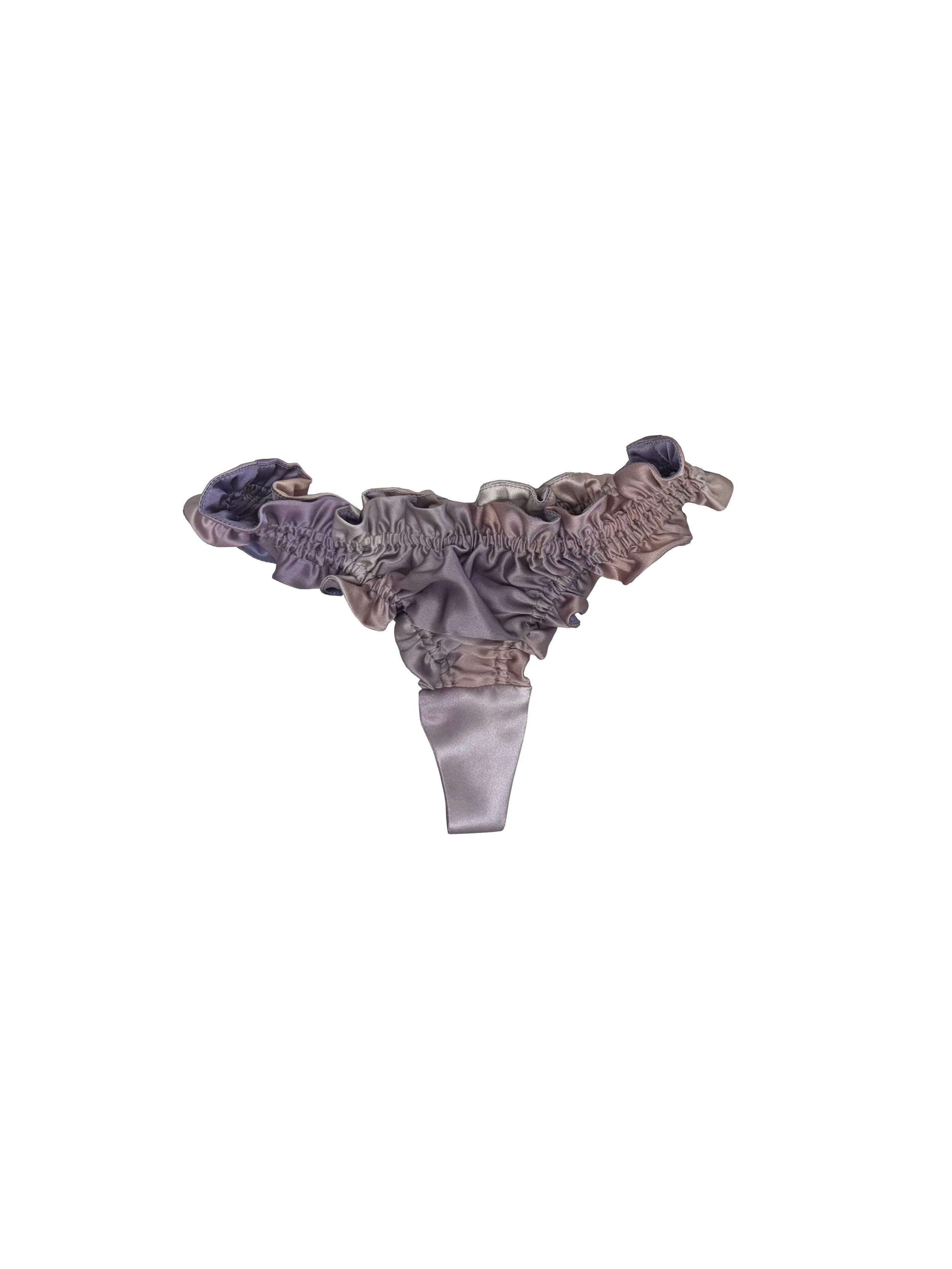
Scalloped knickers in 30 Momme Silk Satin, handcrafted in London.
As part of our Zero Waste Programme, print may vary making each piece unique.
Cloud print designed from designers own collection.
Luxuriously soft, smooth and breathable.
Naturally hypoallergenic
Comfortable elasticated fit.
Hand wash recommended.
Custom Orders
We’d love to custom fit this dress to you! Please select ‘Custom’ in sizing and we’ll be in touch to get your measurements.
Please note that we cannot accept returns on Custom orders as this piece will be made to fit your unique measurements. Alterations and repairs can be made free of charge within the 14 day window of receiving your item.

Scalloped knickers in pure pure 30 Momme Silk Satin, handcrafted in London.
Part of our Zero Waste Programme, print may vary, making each piece unique.
Cloud print from designers personal collection .
Luxuriously soft, smooth and breathable.
Naturally hypoallergenic
Comfortable elasticated fit.
Hand wash recommended.
Custom Orders
We’d love to custom fit this dress to you! Please select ‘Custom’ in sizing and we’ll be in touch to get your measurements.
Please note that we cannot accept returns on Custom orders as this piece will be made to fit your unique measurements. Alterations and repairs can be made free of charge within the 14 day window of receiving your item.

Specially handcrafted with a double layer of heavy silk satin in our London studio, the Astrid corset has all the classic features of her sister (our Nova Corset) accentuating the female silhouette with additional silk straps that create a traditional period neckline that lifts the bust. Perfect for those with a fuller cup and looking for a more secure fit.
Solid metal D rings give an industrial edge to this elegant piece and can be tied using hand finished silk Rouleaus.
Material main composition: 100% Heavy Silk Satin
Details and features
Fully Steel boned
Hand covered button holes
Detailed topstitching
Highest quality material
Steel D ring feature on straps with Silk Rouleau straps
Lace up and adjustable back with hand finished Silk Rouleaus.
When ordering please send us an email with your custom measurements so we can make this to fit you perfectly!
Care & Info:
Made from 100% Silk Satin and manufactured in London.
We believe clothes are investments; pieces to love, cherish and pass down through generations of family and friends, so please always wash and clean your pieces with care.Remember, in general for eco-friendly garment-care, wash and iron at lower temperatures.
This piece can only be Dry Cleaned

Scalloped thong in pure silk, handcrafted in London.
Luxuriously soft, smooth and breathable.
Naturally hypoallergenic
Comfortable elasticated fit.
Hand wash at 30 recommended.
** Order by 10th February for delivery before Valentines Day!
Custom Orders
We’d love to custom fit this dress to you! Please select ‘Custom’ in sizing and we’ll be in touch to get your measurements.
Please note that we cannot accept returns on Custom orders as this piece will be made to fit your unique measurements. Alterations and repairs can be made free of charge within the 14 day window of receiving your item.

Scalloped triangle bra in pure silk, handcrafted in London.
Adjustable spaghetti straps.
Hand-finished silk fastening.
Luxuriously soft, smooth and breathable.
Naturally hypoallergenic
Comfortable elasticated fit.
Hand wash at 30 recommended.
Custom Orders
We’d love to custom fit this dress to you! Please select ‘Custom’ in sizing and we’ll be in touch to get your measurements.
Please note that we cannot accept returns on Custom orders as this piece will be made to fit your unique measurements. Alterations and repairs can be made free of charge within the 14 day window of receiving your item.

Scalloped bandeau bra in pure silk, handcrafted in London.
Adjustable spaghetti straps.
Luxuriously soft, smooth and breathable.
Naturally hypoallergenic
Comfortable elasticated fit.
Hand wash at 30 recommended.
Custom Orders
We’d love to custom fit this dress to you! Please select ‘Custom’ in sizing and we’ll be in touch to get your measurements.
Please note that we cannot accept returns on Custom orders as this piece will be made to fit your unique measurements. Alterations and repairs can be made free of charge within the 14 day window of receiving your item.

Heavy floral embroidery on silk organza with adjustable spaghetti straps. Ethically and sustainably made in London.
Straps are left long for individual styling and can be cut to your desired length.

Scalloped knickers in pure silk, handcrafted in London.
Unique cloud print designed from a photograph by the designer.
Luxuriously soft, smooth and breathable.
Naturally hypoallergenic
Comfortable elasticated fit.
Hand wash at 30 recommended.
Custom Orders
We’d love to custom fit this dress to you! Please select ‘Custom’ in sizing and we’ll be in touch to get your measurements.
Please note that we cannot accept returns on Custom orders as this piece will be made to fit your unique measurements. Alterations and repairs can be made free of charge within the 14 day window of receiving your item.

100% silk
Handcrafted in our studio in London
Luxuriously soft, smooth and breathable
Naturally hypoallergenic
Comfortable elasticated fit
Hand wash at 30 recommended
Custom Orders
We’d love to custom fit this dress to you! Please select ‘Custom’ in sizing and we’ll be in touch to get your measurements.
Please note that we cannot accept returns on Custom orders as this piece will be made to fit your unique measurements. Alterations and repairs can be made free of charge within the 14 day window of receiving your item.

Scalloped triangle bra in pure silk, handcrafted in London.
Adjustable spaghetti straps.
Hand-finished silk fastening.
Luxuriously soft, smooth and breathable.
Naturally hypoallergenic
Comfortable elasticated fit
Hand wash at 30 recommended
Custom Orders
We’d love to custom fit this dress to you! Please select ‘Custom’ in sizing and we’ll be in touch to get your measurements.
Please note that we cannot accept returns on Custom orders as this piece will be made to fit your unique measurements. Alterations and repairs can be made free of charge within the 14 day window of receiving your item.
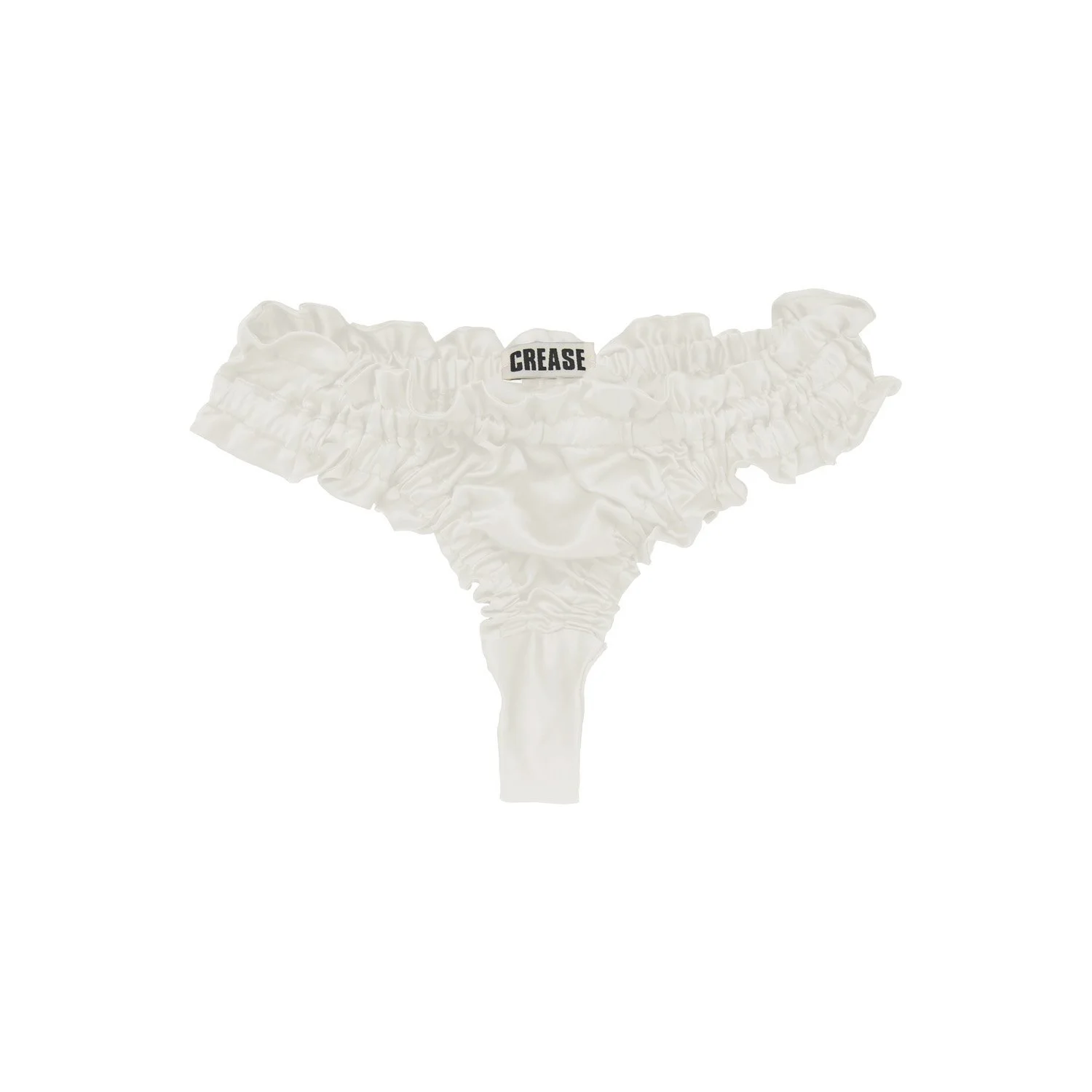
Scalloped thong in pure silk, handcrafted in London.
Luxuriously soft, smooth and breathable.
Naturally hypoallergenic
Comfortable elasticated fit
Hand wash at 30 recommended
Custom Orders
We’d love to custom fit this dress to you! Please select ‘Custom’ in sizing and we’ll be in touch to get your measurements.
Please note that we cannot accept returns on Custom orders as this piece will be made to fit your unique measurements. Alterations and repairs can be made free of charge within the 14 day window of receiving your item.

Scalloped bandeau bra in pure silk, handcrafted in London.
Adjustable spaghetti straps.
Hand-finished silk fastening.
Luxuriously soft, smooth and breathable.
Naturally hypoallergenic
Comfortable elasticated fit.
Hand wash at 30 recommended.
Custom Orders
We’d love to custom fit this dress to you! Please select ‘Custom’ in sizing and we’ll be in touch to get your measurements.
Please note that we cannot accept returns on Custom orders as this piece will be made to fit your unique measurements. Alterations and repairs can be made free of charge within the 14 day window of receiving your item.

Scalloped knickers in pure silk, handcrafted in London.
100% silk satin
Luxuriously soft, smooth and breathable.
Naturally hypoallergenic
Comfortable elasticated fit.
Hand wash at 30 recommended.
Custom Orders
We’d love to custom fit this dress to you! Please select ‘Custom’ in sizing and we’ll be in touch to get your measurements.
Please note that we cannot accept returns on Custom orders as this piece will be made to fit your unique measurements. Alterations and repairs can be made free of charge within the 14 day window of receiving your item.

Scalloped sheer knickers in pure Chiffon with 100% silk edging, handcrafted in London.
100% silk satin
Luxuriously soft, smooth and breathable.
Naturally hypoallergenic
Comfortable elasticated fit.
Hand wash at 30 recommended.
Custom Orders
We’d love to custom fit this dress to you! Please select ‘Custom’ in sizing and we’ll be in touch to get your measurements.
Please note that we cannot accept returns on Custom orders as this piece will be made to fit your unique measurements. Alterations and repairs can be made free of charge within the 14 day window of receiving your item.

Our Sunrise Silk Scrunchies are made from 100% printed heavy silk satin and match perfectly with the Sunrise Silk Slip.
Images were taken from the designer's own collection of the sky.
All scrunchies are made sustainably as part of our Zero waste programme, therefore slight variations in shade and print may occur from the image.

Relax and unwind with our soothing Lavender and & Flaxseed Eye Pillow. With the greatest attention to detail and fun colours, this relaxing eye pillow is weighted for meditation purposes and created with highest quality silk, and organic materials.
Sit the eye pillow over the eyes to block out light and induce slight pressure, activating acupuncture pressure points to instantly soothe. Perfect for meditation, mindfulness and relaxation and all come with a small drawstring bag for storage.
Our fun and frilly removable outer cover is hand washable and made with 100% Silk satin, designed and crafted in London.
Please always hand wash cool and pat dry to ensure the longest life of your product.
-Outer pillowcase - 100% Silk Satin
-Removable aromatherapy bag - Organic Flaxseed and Organic fresh lavender
All silk eye pillows come with a 100% organic brushed cotton bag for storage.
Sizing:
Dimensions - One size fits all
Outer Shell
L- 27cm
H- 14cm
Inner bag
L- 22cm
H- 10.5cm
Top Tips:
If preferred warm, place inner bag in the microwave for 10 second increments. To use as a cold compress, place in freezer for 30-60 minutes before use.
Care& Info:
Our fun and frilly removable outer cover is hand washable and made with 100% Silk satin.
Please always hand wash cool and pat dry to ensure the longest life of your product.
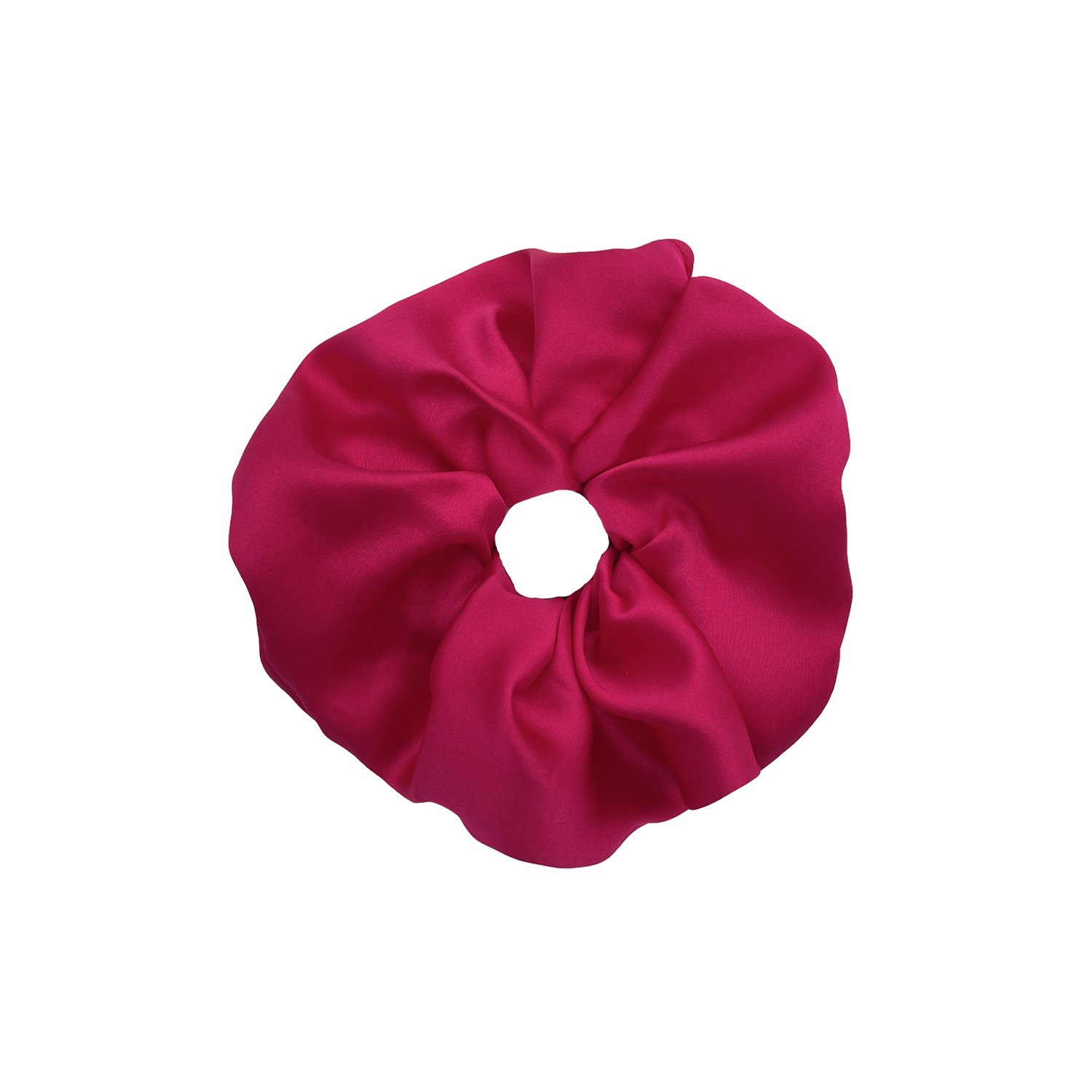
Our Pink Silk Scrunchies are made from 100% silk satin.
All scrunchies are made sustainably as part of our Zero waste programme.

Specially handcrafted from luxury silk satin in our London studio, the Cherry corset is the perfect statement piece suited to any occasion.
Fully boned throughout with silk rouleaus lacing the back, this piece lifts the bust and beautifully accentuates the silhouette.
Details and features:
Fully steel boned
Brass eyelets
Detailed topstitching
Highest quality 100% heavy silk satin
Lace up and adjustable back with silk rouleau straps
Care & Info
Made from 100% Silk Satin and manufactured in London.
Dry clean only
We believe clothes are investments; pieces to love, cherish and pass down through generations of family and friends, so please always wash and clean your pieces with care.Remember, in general for eco-friendly garment-care, wash and iron at lower temperatures.
Sizing
Small: Bust = 78-83 cm, Waist =61-66 cm
Medium: Bust = 84-88 cm, Waist= 67-71 cm
Large: Bust= 89-93 cm, Waist=71-76 cm
Customisation

Scalloped bandeau bra in pure silk, handcrafted in London.
Unique cloud print designed from a photograph by the designer.
Adjustable spaghetti straps.
Luxuriously soft, smooth and breathable.
Naturally hypoallergenic
Comfortable elasticated fit.
Hand wash at 30 recommended.
Custom Orders
We’d love to custom fit this dress to you! Please select ‘Custom’ in sizing and we’ll be in touch to get your measurements.
Please note that we cannot accept returns on Custom orders as this piece will be made to fit your unique measurements. Alterations and repairs can be made free of charge within the 14 day window of receiving your item.

Scalloped triangle bra in pure silk, handcrafted in London.
Unique cloud print designed from a photograph by the designer.
Adjustable spaghetti straps.
Luxuriously soft, smooth and breathable.
Naturally hypoallergenic
Comfortable elasticated fit.
Hand wash at 30 recommended.
Custom Orders
We’d love to custom fit this dress to you! Please select ‘Custom’ in sizing and we’ll be in touch to get your measurements.
Please note that we cannot accept returns on Custom orders as this piece will be made to fit your unique measurements. Alterations and repairs can be made free of charge within the 14 day window of receiving your item.

Scalloped bandeau bra in pure silk, handcrafted in London.
Adjustable spaghetti straps.
Luxuriously soft, smooth and breathable.
Naturally hypoallergenic
Comfortable elasticated fit.
Hand wash at 30 recommended.
Custom Orders
We’d love to custom fit this dress to you! Please select ‘Custom’ in sizing and we’ll be in touch to get your measurements.
Please note that we cannot accept returns on Custom orders as this piece will be made to fit your unique measurements. Alterations and repairs can be made free of charge within the 14 day window of receiving your item.
Our full length Mina slip dress is meticulously hand-crafted in luxurious 40 momme 100% heavy silk satin. Bias cut for the optimum drape, this dress falls beautifully to your natural shape. It features a cowl neckline, adjustable spaghetti straps, a low back, deep side slit and elegant train. This dress is the perfect option for evening and wedding looks.
Designed and made to order in London.
The Mina dress can be made in various colours, with our most popular requests in Off White, White and Champagne. Please email info@creasestudios.com for further details.
Size Guide
Custom Orders
We’d love to custom fit this dress to you! Please select ‘Custom’ in sizing and we’ll be in touch to get your measurements.
Please note that we cannot accept returns on Custom orders as this piece will be made to fit your unique measurements. Alterations and repairs can be made free of charge within the 14 day window of receiving your item.
Any questions? We’d love to help!
Pop us an email at info@creasestudios.com