
Why We Should Buy Clothes to Keep, Not Just Wear Once
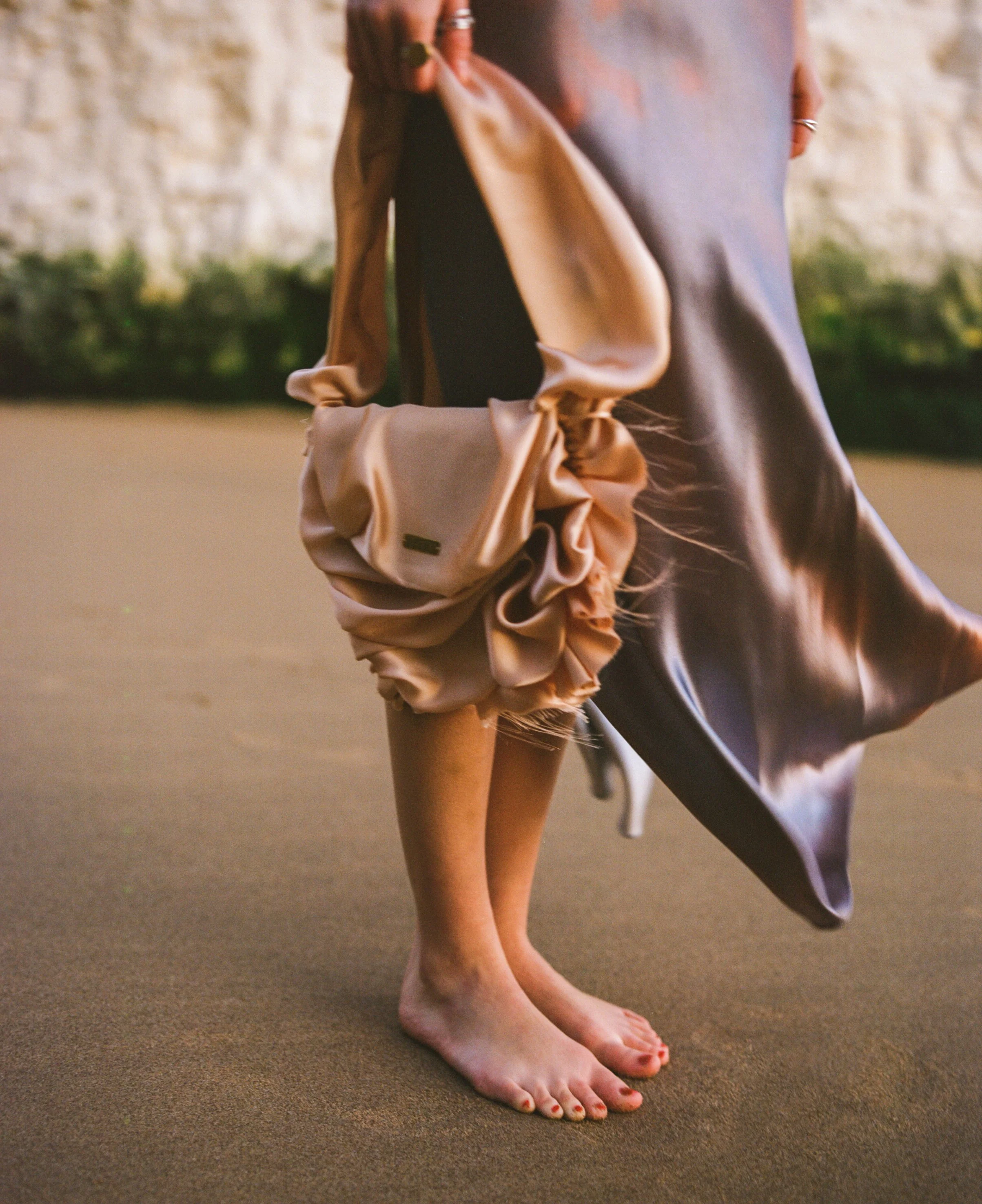
Hello from CREASE Studios,
We’re Rosie and Kate, the founders of CREASE Studios, and today we want to talk about our philosophy around buying.
Why We Should Buy Clothes to Keep, Not Just Wear Once
We live in a world where clothes have become incredibly easy to buy and incredibly easy to forget.
New collections arrive every week. Trends move faster than ever. An item can feel exciting one day and irrelevant the next. But at CREASE Studios, we’ve always felt that clothing can be something more than a temporary addition to our wardrobes.
The pieces we love most are rarely the ones we bought because they were trending. They are the pieces that have stayed with us. The dress we wore to a friend's wedding. The silk slip we took on holiday. The blouse passed down from someone we love. The piece that has been repaired rather than replaced.
We believe clothes should have the opportunity to become those things.
What makes a piece worth keeping?
There is something different about a garment that has been made with time and attention.
When you know who made something, where it came from and what materials were used, it can begin to feel less like a product and more like an object with a story.
This is one of the reasons we are drawn to handmade clothing. The small details matter: the feel of the fabric, the way a seam has been finished, the movement of a dress and the care that has gone into creating it.
Our approach to fashion is rooted in this idea of longevity. We choose natural materials such as silk and organic cotton, work in small batches and create pieces designed to be worn again and again.
Because beautiful clothing doesn't need to be complicated. It simply needs to be made well enough to stay with you.
The emotional value of clothing
Clothes become meaningful through the lives we live in them.
A silk dress might begin as a piece of fabric, but after years of wear it can become connected to a particular summer, a wedding, a relationship or a chapter of your life.
This is something we find so beautiful about clothing.
Its value isn't necessarily determined by its price or how fashionable it is. A garment becomes valuable because of the memories attached to it.
Perhaps that is why we find the idea of a wardrobe built slowly so appealing. Instead of constantly replacing what we own, we have the opportunity to build a collection of pieces that become more personal over time.
Buying less, choosing better
Slow fashion is often talked about in terms of what we shouldn't buy. But we think there is another, more positive way to look at it.
It's about becoming more intentional about what we do buy.
Before purchasing something, ask yourself:
Will I still want to wear this in a few years?
Can I imagine wearing it in different ways?
Is it made from a material I will enjoy living in?
Do I understand where it came from?
Will I be able to care for and repair it?
Most importantly, do I genuinely love it?
These questions can help move us away from impulse purchases and towards a wardrobe that feels considered and personal.
Natural materials and longevity
We are particularly drawn to natural fibres because of the way they feel, age and interact with the body.
Silk, for example, has a natural softness, beautiful drape and timeless quality. It can be incredibly delicate, but with thoughtful care it can remain part of your wardrobe for many years.
For us, choosing a beautiful material is only the beginning. Caring for it is part of the process too.
Washing garments gently, storing them properly, repairing small imperfections and allowing clothes to rest between wears are all simple ways of extending their lives.
We don't think clothing should be precious to the point that you are afraid to wear it.
Quite the opposite.
The best thing you can do for a well-made garment is live in it.
The beauty of repair
There is something incredibly satisfying about mending a piece of clothing.
A repair doesn't necessarily diminish a garment. Sometimes it adds to its story.
A small patch, a replaced button or a carefully repaired seam can become evidence of a life well lived. Instead of hiding every sign of wear, we can begin to see these marks as part of the relationship we have with our clothes.
This is an older way of thinking about fashion that we are increasingly interested in returning to: make, wear, repair, pass on.
Rather than seeing the end of a garment's first life as the end of its usefulness, we can ask what comes next.
Clothing as something to pass on
We love the idea that something we make today might still exist decades from now.
Perhaps it will belong to someone else. Perhaps it will be worn differently. Perhaps it will carry memories that have nothing to do with us.
There is something deeply human about passing clothing from one person to another.
It connects us to the people who came before us and creates a sense of continuity between generations. In a world where so many things are designed to be temporary, making something that can be kept feels quietly radical.
A slower relationship with fashion
We don't believe that everyone needs to stop buying clothes.
Fashion can be joyful. Getting dressed can be expressive, sensual and creative. We love the feeling of discovering a piece that makes you feel completely yourself.
But perhaps we can change our relationship with that feeling.
Instead of asking, What do I want to buy?, we can sometimes ask, What do I want to keep?
Instead of looking for something new every season, we can rediscover what is already in our wardrobes.
Instead of throwing something away when it becomes imperfect, we can learn how to mend it.
And instead of buying a piece because we think we should have it, we can wait for the things we truly love.
At CREASE Studios, this is what we mean when we talk about creating clothing with longevity in mind. Our handmade silk lingerie, dresses and corsetry are made in small batches in London, with an emphasis on considered materials, craftsmanship and timeless design.
We want our pieces to become part of your life.
Not something you wear once and forget, but something you reach for, care for, repair, remember and eventually pass on.
Because perhaps the most sustainable garment isn't simply the one made from the most sustainable material.
Perhaps it's the one you love enough to keep.
With love,
Kate & Rosemary
Founders of CREASE Studios

Hand-crafted from 40 momme 100% heavy silk satin, the Joanie slip dress embodies timeless elegance and effortless femininity. Cut on the bias for the perfect drape, it skims and flatters the natural silhouette with a fluid, body-skimming fit.
A soft cowl neckline, delicate adjustable straps, and an elegant low back bring a touch of sensuality, while deep side slits add modern ease and movement.
Whether styled for an evening occasion, a wedding, or a refined day-to-night look, the Joanie slip is a piece designed to endure as a wardrobe icon.
Designed and made to order in London.
Colour : Sable
Also available in other colours
Custom Orders
We’d love to custom fit this dress to you! Please select ‘Custom’ in sizing and we’ll be in touch to get your measurements.
Please note that we cannot accept returns on Custom orders as this piece will be made to fit your unique measurements. Alterations and repairs can be made free of charge within the 14 day window of receiving your item.
Any questions? We’d love to help!
Pop us an email at info@creasestudios.com

Long slip dress with a unique print from the designers personal collection of cloud photographs.
Bias cut for the optimum drape and fit.
Meticulously hand-crafted in 100% heavy silk satin.
Hand finished adjustable, fine and delicate straps in silk.
Soft, smooth, breathable and naturally hypoallergenic.
Gentle hand wash at 30 or dry clean recommended.
Made to order in London.
Delivery
This piece is part of our Zero-Waste programme.
Delivery is 5 weeks after ordering.
If you’d like it sooner, please email us at info@creasestudios.com and we will do our best to accommodate!
Custom Orders
We’d love to custom fit this dress to you! Please select ‘Custom’ in sizing and we’ll be in touch to get your measurements.
Please note that we cannot accept returns on Custom orders as this piece will be made to fit your unique measurements. Alterations and repairs can be made free of charge within the 14 day window of receiving your item.

Pre-Order
Our beautifully draped slip dress has a unique print from our personal collection of cloud photographs.
Asymmetric and bias-cut for the optimum drape and fit
Meticulously hand-crafted in 100% heavy silk satin
Hand finished, delicate, fine straps in silk and 14k gold plated brass chain
Soft, smooth, breathable and naturally hypoallergenic
Gentle hand wash at 30 or dry clean recommended
Made to order in London
Delivery
This piece is part of our Zero-Waste programme.
Delivery is 5 weeks after ordering.
If you’d like it sooner, please email us at info@creasestudios.com and we will do our best to accommodate!
Custom Orders
We’d love to custom fit this dress to you! Please select ‘Custom’ in sizing and we’ll be in touch to get your measurements.
Please note that we cannot accept returns on Custom orders as this piece will be made to fit your unique measurements. Alterations and repairs can be made free of charge within the 14 day window of receiving your item.

Long slip dress with a unique print from the designers personal collection of cloud photographs.
Bias cut for the optimum drape and fit.
Meticulously hand-crafted in 100% heavy silk satin.
Hand finished adjustable, fine and delicate straps in silk and 14k gold plated brass chain
Soft, smooth, breathable and naturally hypoallergenic.
Gentle hand wash at 30 or dry clean recommended.
Made to order in London.
Delivery
This piece is part of our Zero-Waste programme.
Delivery is 5 weeks after ordering.
If you’d like it sooner, please email us at info@creasestudios.com and we will do our best to accommodate!
Custom Orders
We’d love to custom fit this dress to you! Please select ‘Custom’ in sizing and we’ll be in touch to get your measurements.
Please note that we cannot accept returns on Custom orders as this piece will be made to fit your unique measurements. Alterations and repairs can be made free of charge within the 14 day window of receiving your item.

Scalloped thong in pure silk, handcrafted in London.
Luxuriously soft, smooth and breathable
Naturally hypoallergenic
Comfortable elasticated fit
Hand wash at 30 recommended
Custom Orders
We’d love to custom fit this dress to you! Please select ‘Custom’ in sizing and we’ll be in touch to get your measurements.
Please note that we cannot accept returns on Custom orders as this piece will be made to fit your unique measurements. Alterations and repairs can be made free of charge within the 14 day window of receiving your item.

Scalloped bandeau bra in pure silk, handcrafted in London.
Adjustable spaghetti straps.
Luxuriously soft, smooth and breathable.
Naturally hypoallergenic
Comfortable elasticated fit.
Hand wash at 30 recommended.
** Delivery in time for Valentines Day if ordered before the 10th February!
Custom Orders
We’d love to custom fit this dress to you! Please select ‘Custom’ in sizing and we’ll be in touch to get your measurements.
Please note that we cannot accept returns on Custom orders as this piece will be made to fit your unique measurements. Alterations and repairs can be made free of charge within the 14 day window of receiving your item.

100% silk
Handcrafted in our studio in London
Luxuriously soft, smooth and breathable
Naturally hypoallergenic
Comfortable elasticated fit
Hand wash at 30 recommended
Custom Orders
We’d love to custom fit this dress to you! Please select ‘Custom’ in sizing and we’ll be in touch to get your measurements.
Please note that we cannot accept returns on Custom orders as this piece will be made to fit your unique measurements. Alterations and repairs can be made free of charge within the 14 day window of receiving your item.
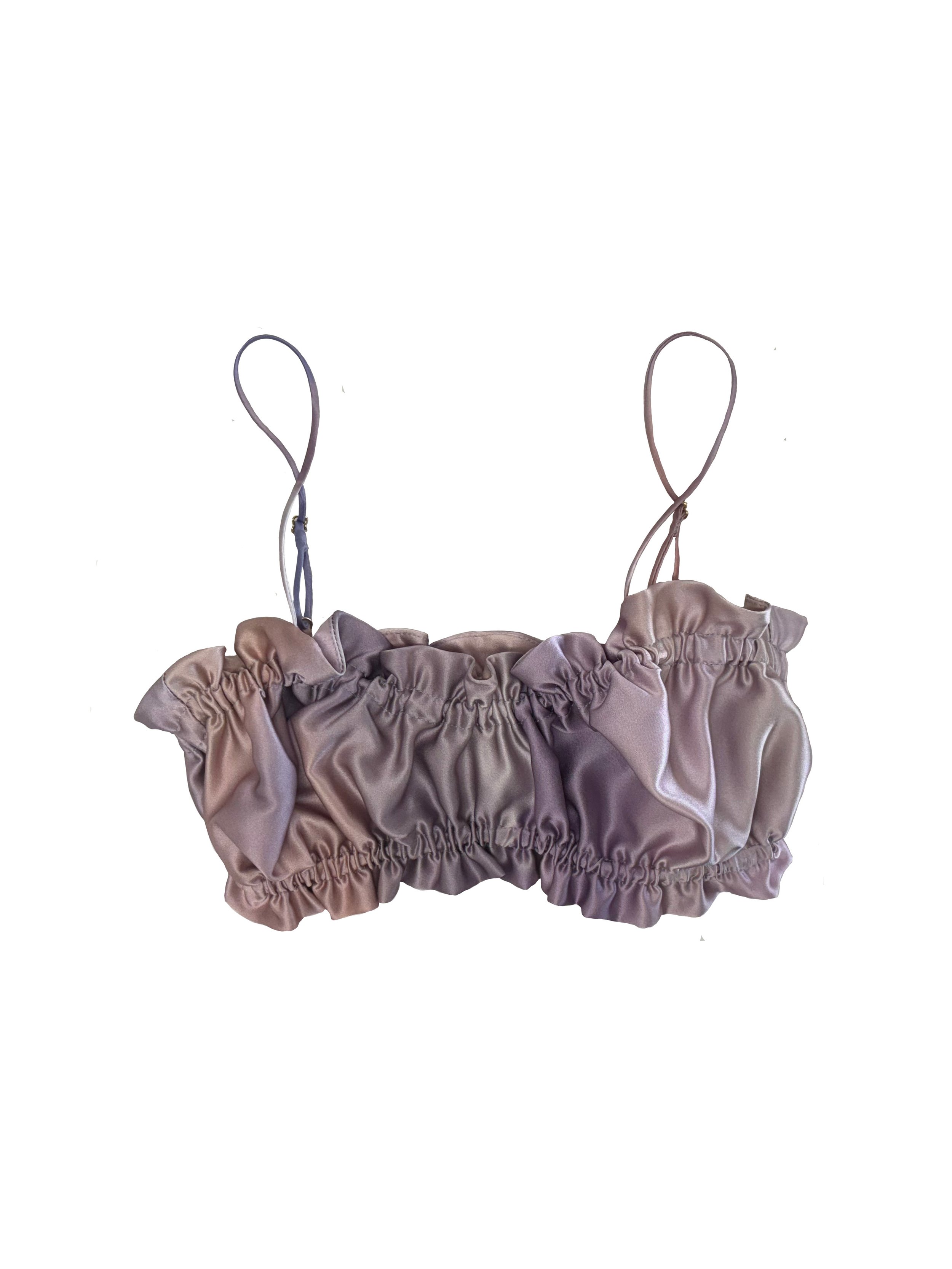
Scalloped bandeau bra in pure 30 momme Silk Satin, handcrafted in London.
Part of our Zero Waste Programme, print may vary, making each piece unique.
Cloud print designed from designers own collection.
Adjustable spaghetti straps.
Luxuriously soft, smooth and breathable.
Naturally hypoallergenic
Comfortable elasticated fit
Hand wash recommended.
Custom Orders
We’d love to custom fit this dress to you! Please select ‘Custom’ in sizing and we’ll be in touch to get your measurements.
Please note that we cannot accept returns on Custom orders as this piece will be made to fit your unique measurements. Alterations and repairs can be made free of charge within the 14 day window of receiving your item.
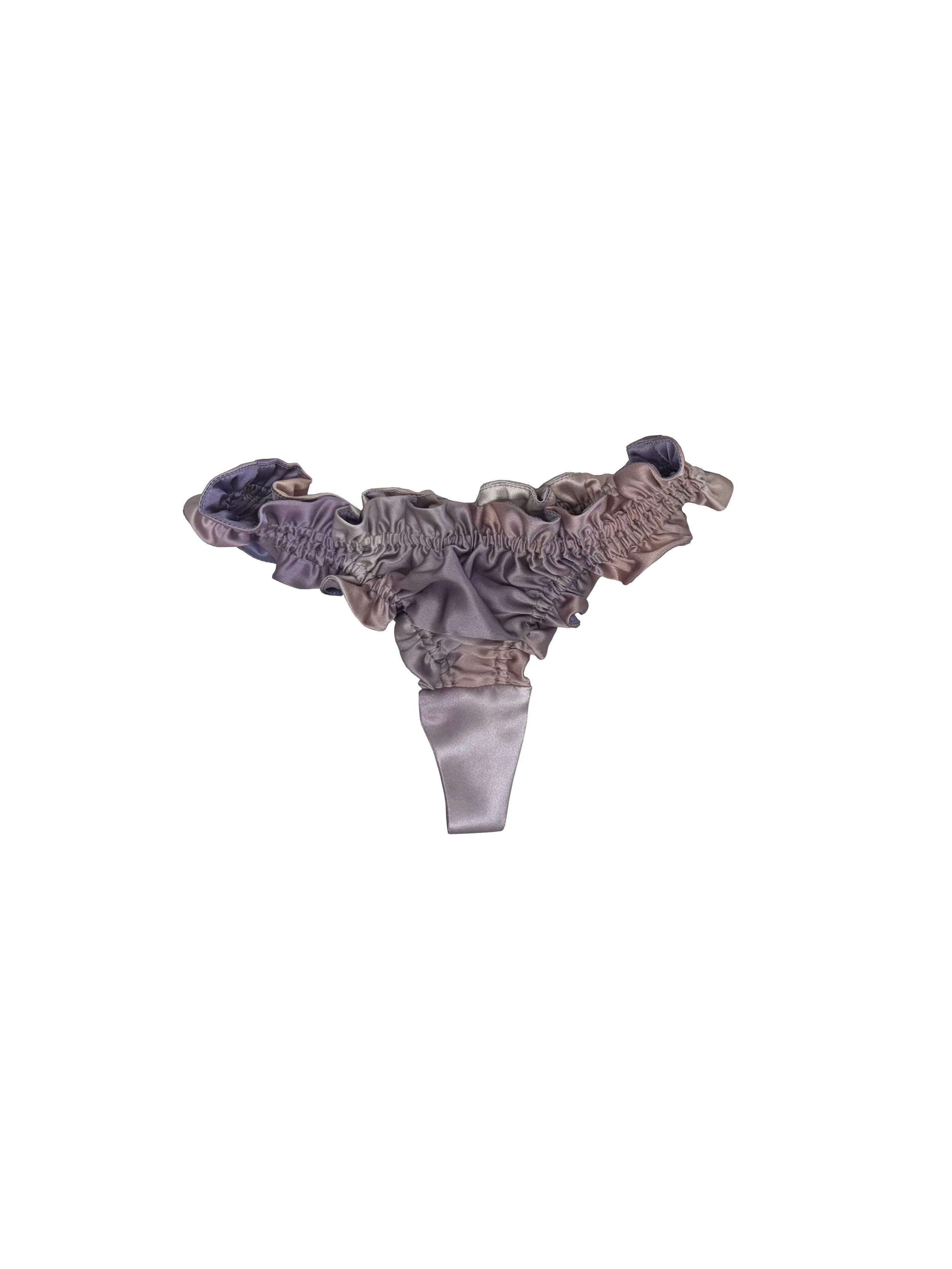
Scalloped knickers in 30 Momme Silk Satin, handcrafted in London.
As part of our Zero Waste Programme, print may vary making each piece unique.
Cloud print designed from designers own collection.
Luxuriously soft, smooth and breathable.
Naturally hypoallergenic
Comfortable elasticated fit.
Hand wash recommended.
Custom Orders
We’d love to custom fit this dress to you! Please select ‘Custom’ in sizing and we’ll be in touch to get your measurements.
Please note that we cannot accept returns on Custom orders as this piece will be made to fit your unique measurements. Alterations and repairs can be made free of charge within the 14 day window of receiving your item.

Scalloped knickers in pure pure 30 Momme Silk Satin, handcrafted in London.
Part of our Zero Waste Programme, print may vary, making each piece unique.
Cloud print from designers personal collection .
Luxuriously soft, smooth and breathable.
Naturally hypoallergenic
Comfortable elasticated fit.
Hand wash recommended.
Custom Orders
We’d love to custom fit this dress to you! Please select ‘Custom’ in sizing and we’ll be in touch to get your measurements.
Please note that we cannot accept returns on Custom orders as this piece will be made to fit your unique measurements. Alterations and repairs can be made free of charge within the 14 day window of receiving your item.

Specially handcrafted with a double layer of heavy silk satin in our London studio, the Astrid corset has all the classic features of her sister (our Nova Corset) accentuating the female silhouette with additional silk straps that create a traditional period neckline that lifts the bust. Perfect for those with a fuller cup and looking for a more secure fit.
Solid metal D rings give an industrial edge to this elegant piece and can be tied using hand finished silk Rouleaus.
Material main composition: 100% Heavy Silk Satin
Details and features
Fully Steel boned
Hand covered button holes
Detailed topstitching
Highest quality material
Steel D ring feature on straps with Silk Rouleau straps
Lace up and adjustable back with hand finished Silk Rouleaus.
When ordering please send us an email with your custom measurements so we can make this to fit you perfectly!
Care & Info:
Made from 100% Silk Satin and manufactured in London.
We believe clothes are investments; pieces to love, cherish and pass down through generations of family and friends, so please always wash and clean your pieces with care.Remember, in general for eco-friendly garment-care, wash and iron at lower temperatures.
This piece can only be Dry Cleaned

Scalloped thong in pure silk, handcrafted in London.
Luxuriously soft, smooth and breathable.
Naturally hypoallergenic
Comfortable elasticated fit.
Hand wash at 30 recommended.
** Order by 10th February for delivery before Valentines Day!
Custom Orders
We’d love to custom fit this dress to you! Please select ‘Custom’ in sizing and we’ll be in touch to get your measurements.
Please note that we cannot accept returns on Custom orders as this piece will be made to fit your unique measurements. Alterations and repairs can be made free of charge within the 14 day window of receiving your item.

Scalloped triangle bra in pure silk, handcrafted in London.
Adjustable spaghetti straps.
Hand-finished silk fastening.
Luxuriously soft, smooth and breathable.
Naturally hypoallergenic
Comfortable elasticated fit.
Hand wash at 30 recommended.
Custom Orders
We’d love to custom fit this dress to you! Please select ‘Custom’ in sizing and we’ll be in touch to get your measurements.
Please note that we cannot accept returns on Custom orders as this piece will be made to fit your unique measurements. Alterations and repairs can be made free of charge within the 14 day window of receiving your item.

Scalloped bandeau bra in pure silk, handcrafted in London.
Adjustable spaghetti straps.
Luxuriously soft, smooth and breathable.
Naturally hypoallergenic
Comfortable elasticated fit.
Hand wash at 30 recommended.
Custom Orders
We’d love to custom fit this dress to you! Please select ‘Custom’ in sizing and we’ll be in touch to get your measurements.
Please note that we cannot accept returns on Custom orders as this piece will be made to fit your unique measurements. Alterations and repairs can be made free of charge within the 14 day window of receiving your item.

Heavy floral embroidery on silk organza with adjustable spaghetti straps. Ethically and sustainably made in London.
Straps are left long for individual styling and can be cut to your desired length.

Scalloped knickers in pure silk, handcrafted in London.
Unique cloud print designed from a photograph by the designer.
Luxuriously soft, smooth and breathable.
Naturally hypoallergenic
Comfortable elasticated fit.
Hand wash at 30 recommended.
Custom Orders
We’d love to custom fit this dress to you! Please select ‘Custom’ in sizing and we’ll be in touch to get your measurements.
Please note that we cannot accept returns on Custom orders as this piece will be made to fit your unique measurements. Alterations and repairs can be made free of charge within the 14 day window of receiving your item.

100% silk
Handcrafted in our studio in London
Luxuriously soft, smooth and breathable
Naturally hypoallergenic
Comfortable elasticated fit
Hand wash at 30 recommended
Custom Orders
We’d love to custom fit this dress to you! Please select ‘Custom’ in sizing and we’ll be in touch to get your measurements.
Please note that we cannot accept returns on Custom orders as this piece will be made to fit your unique measurements. Alterations and repairs can be made free of charge within the 14 day window of receiving your item.

Scalloped triangle bra in pure silk, handcrafted in London.
Adjustable spaghetti straps.
Hand-finished silk fastening.
Luxuriously soft, smooth and breathable.
Naturally hypoallergenic
Comfortable elasticated fit
Hand wash at 30 recommended
Custom Orders
We’d love to custom fit this dress to you! Please select ‘Custom’ in sizing and we’ll be in touch to get your measurements.
Please note that we cannot accept returns on Custom orders as this piece will be made to fit your unique measurements. Alterations and repairs can be made free of charge within the 14 day window of receiving your item.
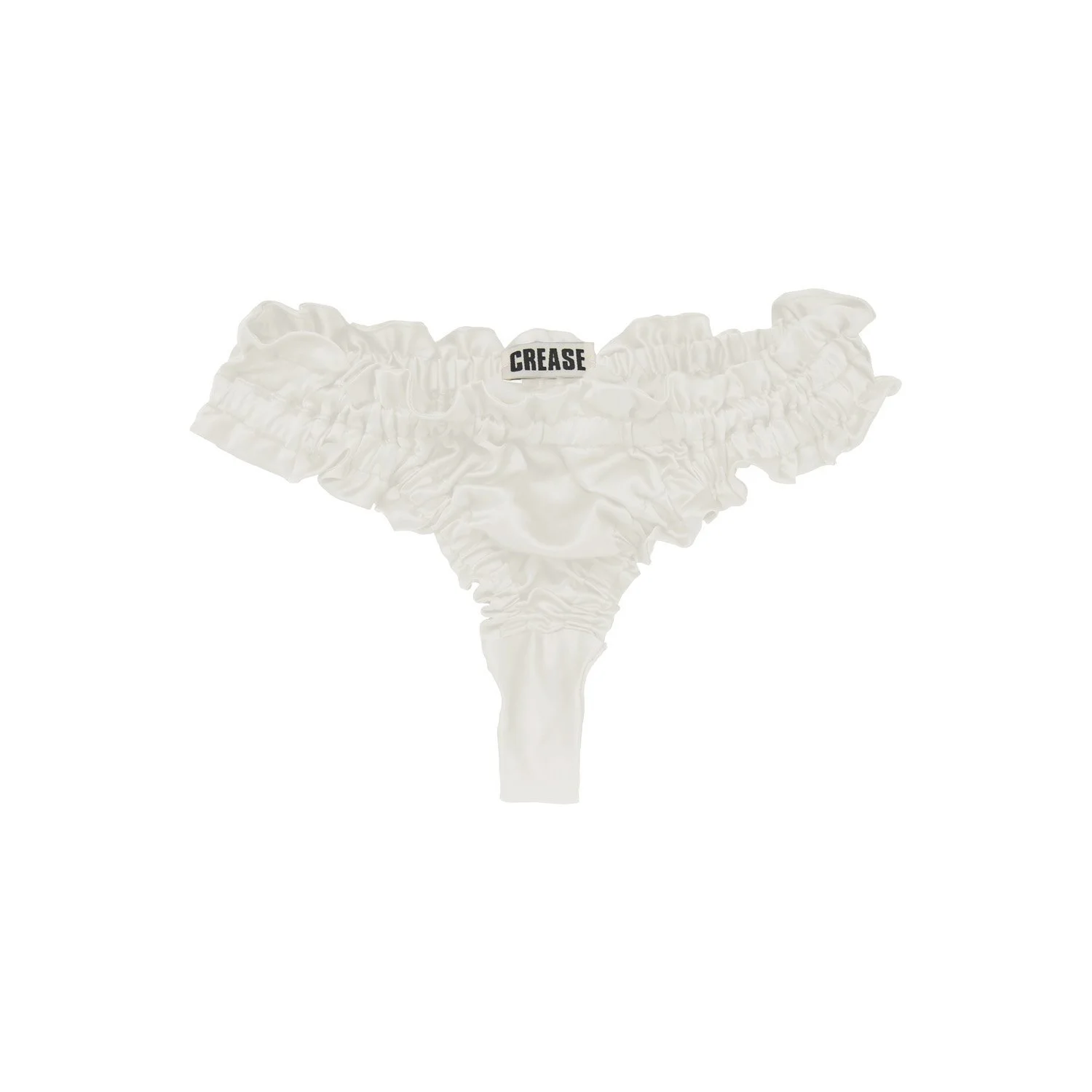
Scalloped thong in pure silk, handcrafted in London.
Luxuriously soft, smooth and breathable.
Naturally hypoallergenic
Comfortable elasticated fit
Hand wash at 30 recommended
Custom Orders
We’d love to custom fit this dress to you! Please select ‘Custom’ in sizing and we’ll be in touch to get your measurements.
Please note that we cannot accept returns on Custom orders as this piece will be made to fit your unique measurements. Alterations and repairs can be made free of charge within the 14 day window of receiving your item.

Scalloped bandeau bra in pure silk, handcrafted in London.
Adjustable spaghetti straps.
Hand-finished silk fastening.
Luxuriously soft, smooth and breathable.
Naturally hypoallergenic
Comfortable elasticated fit.
Hand wash at 30 recommended.
Custom Orders
We’d love to custom fit this dress to you! Please select ‘Custom’ in sizing and we’ll be in touch to get your measurements.
Please note that we cannot accept returns on Custom orders as this piece will be made to fit your unique measurements. Alterations and repairs can be made free of charge within the 14 day window of receiving your item.

Scalloped knickers in pure silk, handcrafted in London.
100% silk satin
Luxuriously soft, smooth and breathable.
Naturally hypoallergenic
Comfortable elasticated fit.
Hand wash at 30 recommended.
Custom Orders
We’d love to custom fit this dress to you! Please select ‘Custom’ in sizing and we’ll be in touch to get your measurements.
Please note that we cannot accept returns on Custom orders as this piece will be made to fit your unique measurements. Alterations and repairs can be made free of charge within the 14 day window of receiving your item.

Scalloped sheer knickers in pure Chiffon with 100% silk edging, handcrafted in London.
100% silk satin
Luxuriously soft, smooth and breathable.
Naturally hypoallergenic
Comfortable elasticated fit.
Hand wash at 30 recommended.
Custom Orders
We’d love to custom fit this dress to you! Please select ‘Custom’ in sizing and we’ll be in touch to get your measurements.
Please note that we cannot accept returns on Custom orders as this piece will be made to fit your unique measurements. Alterations and repairs can be made free of charge within the 14 day window of receiving your item.

Our Sunrise Silk Scrunchies are made from 100% printed heavy silk satin and match perfectly with the Sunrise Silk Slip.
Images were taken from the designer's own collection of the sky.
All scrunchies are made sustainably as part of our Zero waste programme, therefore slight variations in shade and print may occur from the image.

Relax and unwind with our soothing Lavender and & Flaxseed Eye Pillow. With the greatest attention to detail and fun colours, this relaxing eye pillow is weighted for meditation purposes and created with highest quality silk, and organic materials.
Sit the eye pillow over the eyes to block out light and induce slight pressure, activating acupuncture pressure points to instantly soothe. Perfect for meditation, mindfulness and relaxation and all come with a small drawstring bag for storage.
Our fun and frilly removable outer cover is hand washable and made with 100% Silk satin, designed and crafted in London.
Please always hand wash cool and pat dry to ensure the longest life of your product.
-Outer pillowcase - 100% Silk Satin
-Removable aromatherapy bag - Organic Flaxseed and Organic fresh lavender
All silk eye pillows come with a 100% organic brushed cotton bag for storage.
Sizing:
Dimensions - One size fits all
Outer Shell
L- 27cm
H- 14cm
Inner bag
L- 22cm
H- 10.5cm
Top Tips:
If preferred warm, place inner bag in the microwave for 10 second increments. To use as a cold compress, place in freezer for 30-60 minutes before use.
Care& Info:
Our fun and frilly removable outer cover is hand washable and made with 100% Silk satin.
Please always hand wash cool and pat dry to ensure the longest life of your product.
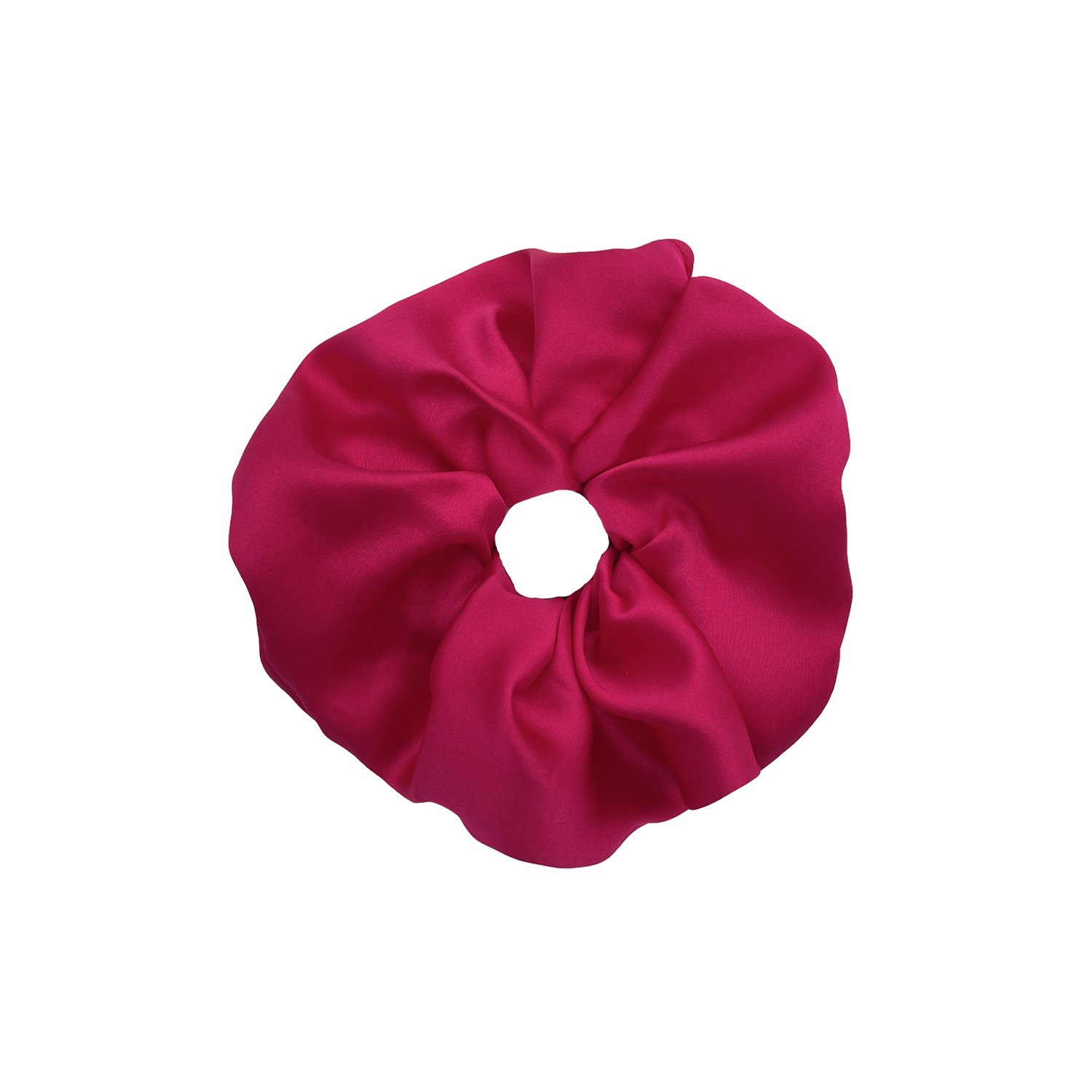
Our Pink Silk Scrunchies are made from 100% silk satin.
All scrunchies are made sustainably as part of our Zero waste programme.

Specially handcrafted from luxury silk satin in our London studio, the Cherry corset is the perfect statement piece suited to any occasion.
Fully boned throughout with silk rouleaus lacing the back, this piece lifts the bust and beautifully accentuates the silhouette.
Details and features:
Fully steel boned
Brass eyelets
Detailed topstitching
Highest quality 100% heavy silk satin
Lace up and adjustable back with silk rouleau straps
Care & Info
Made from 100% Silk Satin and manufactured in London.
Dry clean only
We believe clothes are investments; pieces to love, cherish and pass down through generations of family and friends, so please always wash and clean your pieces with care.Remember, in general for eco-friendly garment-care, wash and iron at lower temperatures.
Sizing
Small: Bust = 78-83 cm, Waist =61-66 cm
Medium: Bust = 84-88 cm, Waist= 67-71 cm
Large: Bust= 89-93 cm, Waist=71-76 cm
Customisation

Scalloped bandeau bra in pure silk, handcrafted in London.
Unique cloud print designed from a photograph by the designer.
Adjustable spaghetti straps.
Luxuriously soft, smooth and breathable.
Naturally hypoallergenic
Comfortable elasticated fit.
Hand wash at 30 recommended.
Custom Orders
We’d love to custom fit this dress to you! Please select ‘Custom’ in sizing and we’ll be in touch to get your measurements.
Please note that we cannot accept returns on Custom orders as this piece will be made to fit your unique measurements. Alterations and repairs can be made free of charge within the 14 day window of receiving your item.

Scalloped triangle bra in pure silk, handcrafted in London.
Unique cloud print designed from a photograph by the designer.
Adjustable spaghetti straps.
Luxuriously soft, smooth and breathable.
Naturally hypoallergenic
Comfortable elasticated fit.
Hand wash at 30 recommended.
Custom Orders
We’d love to custom fit this dress to you! Please select ‘Custom’ in sizing and we’ll be in touch to get your measurements.
Please note that we cannot accept returns on Custom orders as this piece will be made to fit your unique measurements. Alterations and repairs can be made free of charge within the 14 day window of receiving your item.

Scalloped bandeau bra in pure silk, handcrafted in London.
Adjustable spaghetti straps.
Luxuriously soft, smooth and breathable.
Naturally hypoallergenic
Comfortable elasticated fit.
Hand wash at 30 recommended.
Custom Orders
We’d love to custom fit this dress to you! Please select ‘Custom’ in sizing and we’ll be in touch to get your measurements.
Please note that we cannot accept returns on Custom orders as this piece will be made to fit your unique measurements. Alterations and repairs can be made free of charge within the 14 day window of receiving your item.
Our full length Mina slip dress is meticulously hand-crafted in luxurious 40 momme 100% heavy silk satin. Bias cut for the optimum drape, this dress falls beautifully to your natural shape. It features a cowl neckline, adjustable spaghetti straps, a low back, deep side slit and elegant train. This dress is the perfect option for evening and wedding looks.
Designed and made to order in London.
The Mina dress can be made in various colours, with our most popular requests in Off White, White and Champagne. Please email info@creasestudios.com for further details.
Size Guide
Custom Orders
We’d love to custom fit this dress to you! Please select ‘Custom’ in sizing and we’ll be in touch to get your measurements.
Please note that we cannot accept returns on Custom orders as this piece will be made to fit your unique measurements. Alterations and repairs can be made free of charge within the 14 day window of receiving your item.
Any questions? We’d love to help!
Pop us an email at info@creasestudios.com